Beyond Discounts: The Holiday Marketing Triple Play That Actually Works
Anandhi Moorthy
Senior Content Marketer
November 21, 2025
TLDR
Holiday shoppers are overwhelmed, so single-tactic campaigns might not work
The most effective brands use a three-layer strategy: festive messaging, flash sales, and urgency cues.
Holiday wishes build emotional connection and prime customers for upcoming offers.
Flash sales create focused moments of excitement and drive high-intent traffic.
Urgency tactics convert fence-sitters with real deadlines, stock alerts, and countdowns.
Layering all three creates a compounding effect that delivers 3X more revenue with less discounting.
Follow a 4-week holiday timeline: warm-up, peak sales, shipping deadline urgency, and last-minute pushes.
Coordinate channels intentionally, email for storytelling and WhatsApp for real-time alerts.
Use ZEPIC to automate festive messaging, schedule flash sales, and trigger urgency workflows seamlessly.
The holiday season is one of the busiest times for e-commerce brands. Despite economic uncertainty, 77% of consumers plan to spend more this holiday season. But increased spending doesn’t automatically translate into increased revenue for every brand.
Why does this happen?
Inboxes are saturated with “50% OFF” banners and frantic “LAST FEW HOURS!” reminders. When customers are overwhelmed by never-ending sales alerts, they stop paying attention. The more brands push, the quicker shoppers tune out, so what was meant to create urgency ends up creating indifference.
That’s why smart brands use a three-layer strategy that drives 3X revenue with half the discount.
Their strategy blends three complementary components: festive communication, well-timed flash sales, and urgency cues that move users from consideration to purchase. Together, these layers create a compounding effect that single-tactic campaigns simply cannot match.
This guide breaks down the complete playbook for executing this holiday marketing trio.
The Power of the Holiday Triple Play
The holidays are a time when shoppers are emotionally charged and ready to buy. But they are also overwhelmed. They are navigating gift lists, deadlines, family commitments, and an inbox full of aggressive promotions. This creates a unique challenge for brands: demand is high, but attention is limited. In this environment, single-tactic holiday campaigns rarely deliver their full potential.
Imagine a home décor brand sending “Final Chance: Sale Ends Tonight” three days in a row. By the third email, customers stop believing the message. The urgency feels artificial, and the offer feels repetitive.
This is exactly where the three-layer strategy changes everything. Let’s look at how
If the same brand had started with festive communication, customers would already feel connected and more receptive. A warm holiday message, a thoughtful thank-you, or a small early-access perk builds familiarity and trust. It creates a positive emotional foundation so any upcoming offer feels relevant instead of intrusive.
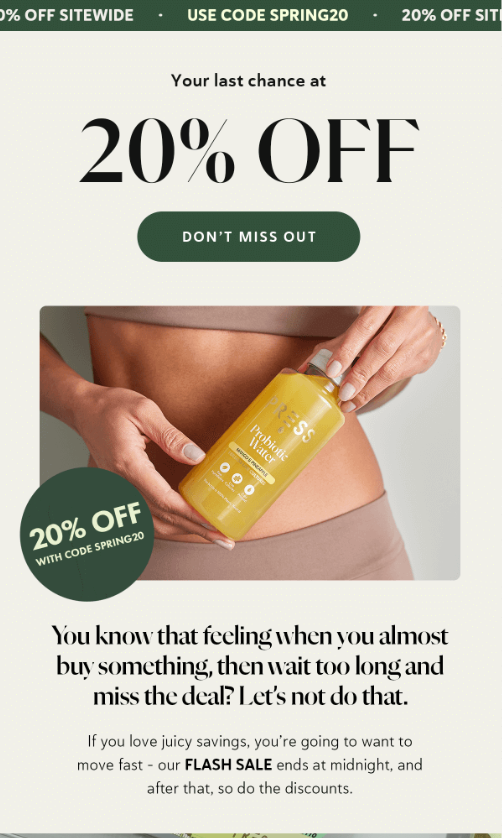
Next, instead of repeating the same last-minute message, the brand could run a well-timed flash sale with a clear start and end. They could announce it a day in advance to build anticipation, then run it for a focused 4 to 6 hours. When the sale finally goes live, it feels intentional and worth paying attention to.
Finally, urgency cues play their role naturally. A reminder at the halfway mark or a last-hour alert feels credible because the event has a real beginning and ending. Customers understand that if they don’t act now, they will actually miss something meaningful.
Let’s dive into the details of how the triple holiday marketing play works.
Layer 1: Holiday Wishes That Build Connection
During December, shoppers are not only buying products; they are buying gifts, celebrating traditions, and reflecting on the year. A brand that acknowledges this emotional context earns more attention than a brand that immediately pushes discounts. Holiday wishes form the emotional foundation of the Holiday Marketing Triple Play.
But most brands send a simple “Season’s Greetings” email. If you want to leave a lasting impression that translates into sales, build genuine connection through thoughtful messages, small surprises, or personalized notes. This transforms holiday wishes from a routine gesture into a relationship-building moment.
Holiday Wishes Examples
Pre-holiday: “Wishing you joy as the season begins.”
During sales: “Thanks for being part of our family.”
Post-holiday: “Here’s to an amazing new year.”
Best Practices
Send wishes separately from discount-heavy emails
Include a small surprise such as early access or bonus points
Personalize using customer history or milestones
Use festive visuals that feel elegant, not generic
Channel Strategy
Email
Great for visually rich cards and longer gratitude messages
Can include subtle animations, festive elements, or personalized notes
Works well as the “anchor” channel for both storytelling and visual appeal
WhatsApp
Ideal for short, warm, conversational holiday notes
Feels personal and direct, which helps strengthen emotional connection
Excellent for sharing early-access links to upcoming flash sales
Expected Outcomes
Higher email engagement: Brands often see up to a 20% increase in open and click rates for subsequent promotional campaigns.
Stronger customer sentiment: Customers perceive the brand as thoughtful instead of transactional.
Better performance for flash sales: Warmed-up audiences are more likely to engage with short-window offers.
Improved campaign deliverability: Early-season engagement signals boost inbox placement for the rest of December.
Layer 2: Flash Sales That Create Excitement
Flash sales are one of the most powerful revenue drivers during the holiday season. Shoppers are actively hunting for deals, comparing options, and making fast decisions. A well-designed flash sale aligns perfectly with this behavior and creates a moment customers do not want to miss.
However, most brands either run long, unfocused sales or repeat the same message for days. This drains the excitement and makes the promotion feel like just another discount rather than a time-sensitive event.
To make flash sales effective, you need three things—clear timing, a sharp window, and a build-up that signals something special is coming. When executed well, flash sales create intense bursts of traffic and conversions.
Creating Anticipation Without Fatigue
Teasing your flash sale 24 hours in advance gives customers something to look forward to. It also separates your brand from the constant stream of surprise discounts. A simple teaser email, WhatsApp alert, or story post can build just enough curiosity without overwhelming customers. When the sale goes live, they are ready.
Optimal Timing and Duration
A 4-6 hour window is the sweet spot for a flash sale. It is long enough for different time zones and busy schedules, yet short enough to maintain urgency. Anything longer reduces excitement and delays buying decisions. Anything shorter risks being missed entirely. This tight window trains customers to pay attention when you announce a flash sale.
Week 1: Soft flash sale to test audience response.
Week 2: Major flash sale with your biggest offer.
Week 3: Category-specific flash sales for targeted excitement.
Week 4: Last-chance clearance flash to move remaining stock.
Best Practices
Build anticipation by announcing the event 24 hours early
Use exact time windows instead of vague “ends soon” language
Highlight scarcity or limited availability authentically
Reserve special inventory or exclusive items specifically for flash events
Expected Outcomes
High-converting sales bursts: Flash sales often generate 25 to 30% of total holiday revenue.
Better engagement: Timed events perform significantly better than ongoing discounts.
Healthier margins: Short windows reduce the need for week-long markdowns.
Increased urgency responsiveness: Customers trained through flash events react faster to later deadlines.
Layer 3: Urgency Tactics That Convert
Urgency is the final layer that turns interest into action. Shoppers may browse your products, add items to cart, or even revisit a flash sale, but many still hesitate. This could be because they were distracted or still contemplating. A well-crafted urgency message gives them a clear reason to complete the purchase now instead of postponing it.
During the holidays, urgency becomes even more powerful. Customers are racing against shipping cutoffs, low-stock alerts, and last-minute gifting needs. But using urgency is a fine line between increasing conversions and damaging their trust. The key is to stay authentic, purposeful, and relevant to the customer journey.
Three Types of Urgency
Timer-based urgency “Ends in 3 hours.” Works well during flash sales, weekend deals, or time-bound bundles.
Inventory-based urgency “Only 5 left in stock.” Effective for limited editions, seasonal items, or bestsellers.
Deadline-based urgency “Order by Dec 20 for delivery before Christmas.” Ideal for shipping cutoffs, guaranteed delivery dates, and personalized products.
Using a mix of these three creates a multi-trigger urgency approach that feels natural rather than forced.
Campaign Flow
Initial trigger: “Final chance at this price.”
Escalation: “Only a few hours left.”
Final push: “Last call. Offer expires in 1 hour.”
Last minute: “Final minutes remaining.”
This structure keeps urgency clear without overwhelming the customer.
Layering Urgency With Other Campaigns
Urgency works best when paired with the other two layers of the Triple Play.
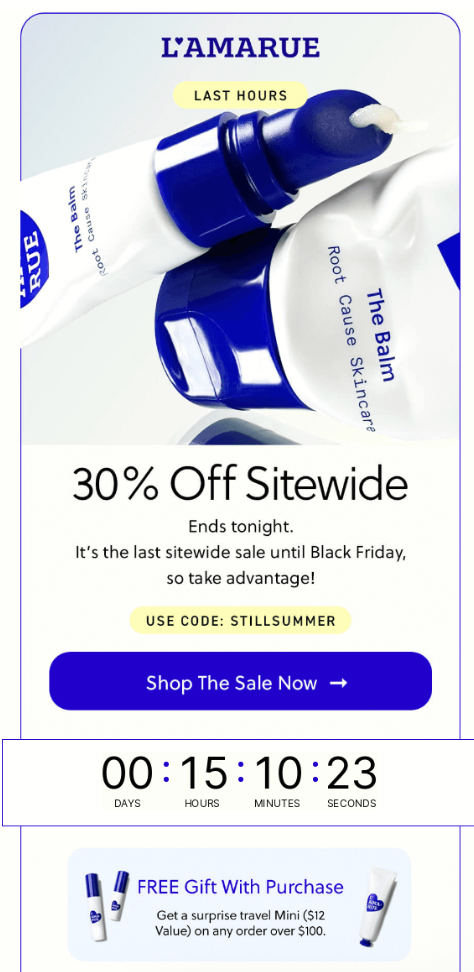
Add urgency to flash sales: Timers, countdowns, and reminders help customers act within the 4–6 hour window.
Include subtle urgency in holiday messages: Gentle cues like “Make sure it arrives in time” can boost early-season conversions.
Use urgency for shipping deadlines: One of the strongest forms of real urgency during December.
When you integrate urgency into festive messaging and flash sales, you make sure every campaign has a natural moment of action.
Best Practices
Use real constraints only: Base urgency on genuine time limits, actual stock levels, or real shipping deadlines to maintain trust.
Match urgency type to the product: Use timers for promos and bundles, inventory cues for limited items, and deadline-based urgency for delivery-sensitive products.
Segment by engagement level: Send stronger urgency cues to high-intent shoppers and lighter reminders to colder audiences to prevent overwhelm.
Test frequency to avoid fatigue: Experiment with how often you send urgency messages. Too many alerts reduce impact, while too few may leave conversions on the table.
Expected Outcomes
Higher conversions: Many brands see up to a 35% increase in conversions during the urgency window
Faster decision-making: Customers complete purchases earlier and abandon carts less often.
Better results from flash sales: Urgency boosts the performance of timed events.
Stronger reliance on real deadlines: Shipping cutoffs and low-stock messages drive meaningful action.
Orchestrating All Three
To maximize the impact of your holiday campaigns, orchestrate the three strategies—holiday wishes, flash sales, and urgency—across a carefully planned 4-week timeline. This phased approach builds momentum, sustains engagement, and leverages each strategy’s strengths at the right moments.
4-Week Holiday Timeline
Week 1 (December 1-7)
Monday: Launch your holiday wishes campaign to establish emotional connection early.
Wednesday: Run your first soft flash sale lasting 6 hours to spark excitement without overwhelming customers.
Friday: Begin rolling out urgency messaging to prompt early action and keep top sellers moving.
Week 2 (December 8-14)
Tuesday: Send a second round of holiday wishes to nurture goodwill and reinforce connection.
Thursday: Hold your major flash sale event with the biggest discounts or exclusive offers.
Daily: Maintain urgency on best-selling products with countdown timers, low-stock alerts, or delivery deadlines.
Week 3 (December 15-21)
Monday: Focus on shipping deadline urgency, reminding customers to order now to receive gifts on time.
Wednesday: Host a VIP flash sale targeted at your most engaged customers with special perks.
Daily: Combine all three strategies—festive messages, flash sales, and urgency cues—to maximize last-minute conversions.
Week 4 (December 22-31)
Push a last-minute urgency campaign for stragglers who haven’t converted.
Run digital gift flash sales for easy last-minute purchases like gift cards or downloadable products.
Send year-end holiday thank-you messages to close the season on a high note and build loyalty for the year ahead.
Channel Coordination
To make the Triple Play feel cohesive rather than overwhelming, assign each layer to the channels where it performs best.
Email
Primary channel for festive communication and visual storytelling
Best for announcing flash sales, delivering countdown graphics, and sharing early access
Ideal for structured sequences like pre-sale teasers and last-hour push emails
WhatsApp
Perfect for real-time urgency and reminder-based messaging
Works well for short, personal updates such as “Starts in 1 hour” or “Only a few left.”
Excellent for VIP alerts or early-access links during flash sale windows
By sequencing the Holiday Marketing Triple Play this way, you avoid overwhelming their audience, maintain relevance across all touchpoints, and drive engagement throughout the peak shopping season.
Wrapping Up
The holiday season is too crowded and competitive for any single tactic to carry your entire campaign. Brands that rely only on discounts or festive messages or urgency struggle to stand out. If you want to win, combine all three.
If you are implementing this framework for the first time, start simple. Choose the easiest layer to execute—often festive messaging or a single well-timed flash sale—then build from there. As you learn what resonates with your audience, layer in urgency, refine timing, and expand your calendar. Over time, this becomes a repeatable, scalable holiday system that protects margins and maximizes revenue year after year.
Want to put this Triple Play into action with ease? ZEPIC has just what you need; book a demo today!
Desperate times call for desperate Google/Chat GPT searches, right? "Best Shopify apps for sales." "How to increase online sales fast." "AI tools for ecommerce growth."
Been there. Done that. Installed way too many apps. But here's what nobody tells you while you're doom-scrolling through Shopify app reviews at 2 AM—that magical online sales-boosting app you're searching for? It doesn't exist. Because if it did, Jeff Bezos would've bought (or built!) it yesterday, and we (fellow eCommerce store owners) would all be retired in Bali by now. Growing a Shopify store and increasing online sales isn’t easy—we get it. While everyone’s out chasing the next “revolutionary” tool/trend (looking at you, DeepSeek), the real revenue drivers are probably hiding in plain sight—right there inside your customer data. After working with Shopify stores like yours (shoutout to Cybele, who recovered almost 25% of their abandoned carts with WhatsApp automation), we’ve cracked the code on what actually moves the needle. Ready to stop app-hopping and start actually growing your sales by using what you already have? Here are four fixes that will get you there!
The Painful Truth: You're probably losing about 70% of your potential sales to cart abandonment. That's not just a statistic—it's real money walking out of your digital door. And looking for yet another Shopify app for abandoned cart recovery isn't going to fix it if you're not getting the fundamentals right.
The Quick Fix: Everyone knows you need multi-channel recovery that hits the sweet spot between "Hey, did you forget something?" and "PLEASE COME BACK!" But here's the reality—most recovery apps are a one-trick pony. They either do email OR WhatsApp, not both. And don't even get us started on personalizing offers based on cart value—that usually means toggling between three different dashboards while praying your apps talk to each other.
Enter ZEPIC: This is where we come in. With ZEPIC's automated Flows, you can: Launch WhatsApp recovery messages (with 95% open rates!) Set up perfectly timed email sequences (or vice versa) Create personalized recovery offers not just on cart value but based on your customer’s behavior/preferences Track and optimize everything from one dashboard
Fix #2: Reactivate past customers today
The Painful Truth: You're probably losing about 70% of your potential sales to cart abandonment. That's not just a statistic—it's real money walking out of your digital door. And looking for yet another Shopify app for abandoned cart recovery isn't going to fix it if you're not getting the fundamentals right.
The Quick Fix: Everyone knows you need multi-channel recovery that hits the sweet spot between "Hey, did you forget something?" and "PLEASE COME BACK!" But here's the reality—most recovery apps are a one-trick pony. They either do email OR WhatsApp, not both. And don't even get us started on personalizing offers based on cart value—that usually means toggling between three different dashboards while praying your apps talk to each other.
Enter ZEPIC: This is where we come in. With ZEPIC's automated Flows, you can: Launch WhatsApp recovery messages (with 95% open rates!) Set up perfectly timed email sequences (or vice versa) Create personalized recovery offers not just on cart value but based on your customer’s behavior/preferences Track and optimize everything from one dashboard
Offering light at the end of the tunnel is Google’s Privacy Sandbox which seeks to ‘create a thriving web ecosystem that is respectful of users and private by default’. Like the name suggests, your Chrome browser will take the role of a ‘privacy sandbox’ that holds all your data (visits, interests, actions etc) disclosing these to other websites and platforms only with your explicit permission. If not yet, we recommend testing your websites, audience relevance and advertising attribution with Chrome’s trial of the Privacy Sandbox.
Top 3 impacts of the third-party cookie phase-out
Who’s impacted
How
What next
Digital advertising and acquisition teams
Lack of cookie data results in drastic fall in website traffic and conversion rate
Review all cookie-based audience acquisition. Sign up for Chrome’s trial of the Privacy Sandbox
Digital Customer Experience
Customers are not served relevant, personalised experiences: on the web, over social channels and communication media
Multiply efforts to collect first-party customer data. Implement a Customer Data Platform
Security, Privacy and Compliance teams
Increased scrutiny from regulators and questions from customers about data storage and usage
Review current cookie and communication consent management, ensure to align with latest privacy regulations


%201.png)