The Future of Retail: 5 Leaders, 4 Brutal Truths, and 1 Clear Direction
Anandhi Moorthy
Senior Content Marketer
February 25, 2026
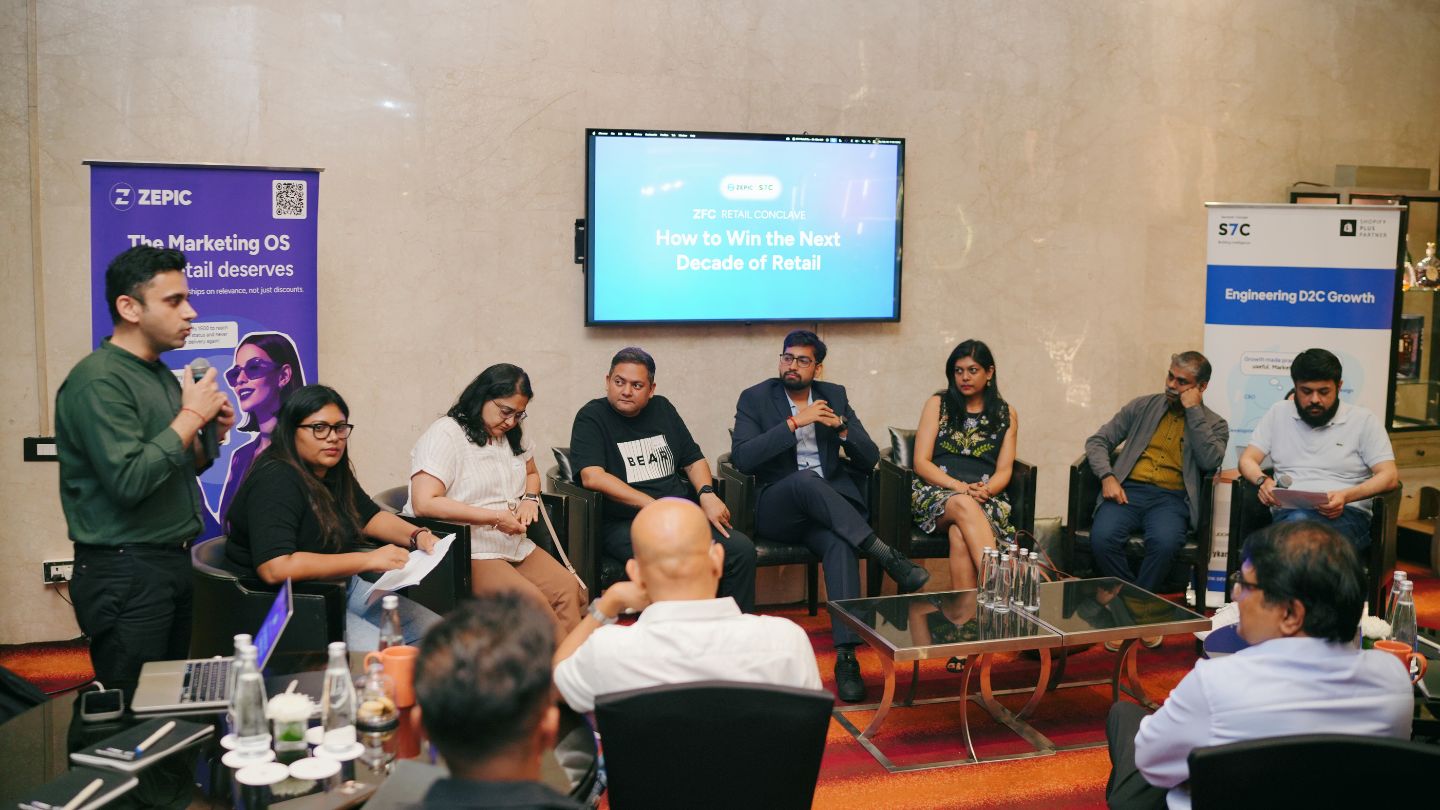
On the evening of 19th February 2026, five of the most interesting retail minds walked into a room at Sofitel BKC, Mumbai, and had an unusually honest conversation.
Leaders from Malabar Gold, Clovia, The Bear House, Mafatlal, and Style Union talked openly about what is changing, what is breaking, and what they are actually doing about it.
The event was the ZFC Retail Conclave, hosted by ZEPIC and Seventh Triangle, built around one question: How do you win the next decade of retail?
The Hard Truths Retail Brands Need to Understand
What Do Modern Customers Really Want?
Though the consumer behavior and discovery touchpoints have changed over the years. What they want has always been the same: premium quality (Q1) at an accessible price point (P2).
But the challenge is that today’s shoppers are highly resistant to aggressive sales tactics. You can’t push a product into their inbox or feed and expect a sale. Because at least four other brands are doing the same. If you want to win over the customer, what you’re selling has to resonate with what they need at that moment. As Soumya Kant from Clovia puts it:
"Customers still want value. What’s changed is how they discover and evaluate brands. You cannot interrupt them anymore; you have to be relevant."
Is Loyalty a Thing of the Past?
A decade ago, a customer might walk into the same store every year to buy a familiar brand of shirts or jewelry. The decision was simple because they were loyal to the brand.
But the new generation of shoppers operate in a very different environment. To them, thousands of brands are one search or scroll away. They also have the resources to instantly compare multiple products and find one that best fits their needs.
Rohit Kant noted that Gen Z, in particular, prioritizes the specific product over the brand name on the label.
"Loyalty today is intentional. It’s when a customer actively seeks you out, not when they discover you accidentally through an algorithm. Gen Z are being more attached to products than brands. So finding that product-market fit is a gamechanger."
Meena Bhatnagar added that,
“Customers are more informed and experimental. Sustaining loyalty means evolving with them, not assuming legacy trust is enough.”
How Complex Has Omnichannel Retail Become?
Marketplaces now drive a massive share of business, which makes the customer journey harder to track. The panel discussed how omnichannel has become an important part of a legacy brand’s survival strategy.
For a brand like Mafatlal, the goal is to bridge decades of history with a digital-first mindset. Vikas Dwivedi explained that data provides the context needed to make this transition successful.
"Omnichannel for legacy brands is transformation. We are reinterpreting decades of trust for customers who now discover us digitally, and data and context stays at the centre of it."
Meena Bhatnagar from Malabar Gold highlighted that the digital experience is often the foundation of trust. Customers rarely visit a high-value store like a jeweler without doing extensive research first. If the digital journey is broken, the physical sale never happens.
"Digital plays a critical role in influencing trust today. Customers research deeply before they walk into a store. Capturing that journey is essential."
Why Is Agility Better Than Prediction?
The traditional way of planning a decade in advance is losing its effectiveness. The speed of social media trends and market shifts means that being fast is now more important than being right about a long-term guess.
Alok Dharadhar from Style Union suggested that brands should stop trying to map out ten years in detail. Instead, they should build the muscle to react to what is happening right now.
"You can’t plan ten years in detail. You move full throttle based on the signals you see today instead of preparing for the decade ahead. Things are changing very fast."
How Can Retail Brands Win in 2026 and Beyond?
The overarching theme of the conclave was that scale alone is no longer a competitive advantage. The winners of the next decade will be brands that use digital intelligence to build meaningful, real-time conversations.
Naveen, co-CEO of ZEPIC, concluded that the focus must move from simple data collection to being context-aware. And, it’s time for brands to move one step ahead of personalization by segmenting and thinking about timely resonance based on signals.
"In an era of brand infidelity and endless choice, relevance is the new competitive advantage. The brands that listen better and act faster will lead the next decade of Indian retail." — Naveen, co-CEO, ZEPIC
Quick Comparison: Reach vs. Resonance
Strategy
Focus on Reach
Focus on Resonance
Goal
Maximum eyeballs and visibility
Meaningful connection and timing
Data Use
Broad demographic targeting
Real-time customer signals and business signals
Outcome
Accidental discovery
Intentional loyalty
Longevity
Short-term sales spikes
Sustained emotional memory
The next decade will reward brands that can balance premium value with easy access. To succeed, retail brands have to combine digital intelligence with a human touch. When they capture context and make intelligent decisions across every channel, brands can move from being an option to being a preference.
Desperate times call for desperate Google/Chat GPT searches, right? "Best Shopify apps for sales." "How to increase online sales fast." "AI tools for ecommerce growth."
Been there. Done that. Installed way too many apps. But here's what nobody tells you while you're doom-scrolling through Shopify app reviews at 2 AM—that magical online sales-boosting app you're searching for? It doesn't exist. Because if it did, Jeff Bezos would've bought (or built!) it yesterday, and we (fellow eCommerce store owners) would all be retired in Bali by now. Growing a Shopify store and increasing online sales isn’t easy—we get it. While everyone’s out chasing the next “revolutionary” tool/trend (looking at you, DeepSeek), the real revenue drivers are probably hiding in plain sight—right there inside your customer data. After working with Shopify stores like yours (shoutout to Cybele, who recovered almost 25% of their abandoned carts with WhatsApp automation), we’ve cracked the code on what actually moves the needle. Ready to stop app-hopping and start actually growing your sales by using what you already have? Here are four fixes that will get you there!
The Painful Truth: You're probably losing about 70% of your potential sales to cart abandonment. That's not just a statistic—it's real money walking out of your digital door. And looking for yet another Shopify app for abandoned cart recovery isn't going to fix it if you're not getting the fundamentals right.
The Quick Fix: Everyone knows you need multi-channel recovery that hits the sweet spot between "Hey, did you forget something?" and "PLEASE COME BACK!" But here's the reality—most recovery apps are a one-trick pony. They either do email OR WhatsApp, not both. And don't even get us started on personalizing offers based on cart value—that usually means toggling between three different dashboards while praying your apps talk to each other.
Enter ZEPIC: This is where we come in. With ZEPIC's automated Flows, you can: Launch WhatsApp recovery messages (with 95% open rates!) Set up perfectly timed email sequences (or vice versa) Create personalized recovery offers not just on cart value but based on your customer’s behavior/preferences Track and optimize everything from one dashboard
Fix #2: Reactivate past customers today
The Painful Truth: You're probably losing about 70% of your potential sales to cart abandonment. That's not just a statistic—it's real money walking out of your digital door. And looking for yet another Shopify app for abandoned cart recovery isn't going to fix it if you're not getting the fundamentals right.
The Quick Fix: Everyone knows you need multi-channel recovery that hits the sweet spot between "Hey, did you forget something?" and "PLEASE COME BACK!" But here's the reality—most recovery apps are a one-trick pony. They either do email OR WhatsApp, not both. And don't even get us started on personalizing offers based on cart value—that usually means toggling between three different dashboards while praying your apps talk to each other.
Enter ZEPIC: This is where we come in. With ZEPIC's automated Flows, you can: Launch WhatsApp recovery messages (with 95% open rates!) Set up perfectly timed email sequences (or vice versa) Create personalized recovery offers not just on cart value but based on your customer’s behavior/preferences Track and optimize everything from one dashboard
Offering light at the end of the tunnel is Google’s Privacy Sandbox which seeks to ‘create a thriving web ecosystem that is respectful of users and private by default’. Like the name suggests, your Chrome browser will take the role of a ‘privacy sandbox’ that holds all your data (visits, interests, actions etc) disclosing these to other websites and platforms only with your explicit permission. If not yet, we recommend testing your websites, audience relevance and advertising attribution with Chrome’s trial of the Privacy Sandbox.
Top 3 impacts of the third-party cookie phase-out
Who’s impacted
How
What next
Digital advertising and acquisition teams
Lack of cookie data results in drastic fall in website traffic and conversion rate
Review all cookie-based audience acquisition. Sign up for Chrome’s trial of the Privacy Sandbox
Digital Customer Experience
Customers are not served relevant, personalised experiences: on the web, over social channels and communication media
Multiply efforts to collect first-party customer data. Implement a Customer Data Platform
Security, Privacy and Compliance teams
Increased scrutiny from regulators and questions from customers about data storage and usage
Review current cookie and communication consent management, ensure to align with latest privacy regulations


%201.png)