Part 1 of 3: The Saturation of ‘Marketing Automation’
Divya Murugesan
Head of Product Marketing
January 5, 2026
Introducing the Composable Marketing OS: Why ZEPIC Exists—A Three-Part Series
Marketing Automation.
Customer Data Platforms.
Customer Engagement Platforms.
Journey Orchestration.
Customer Experience Platforms.
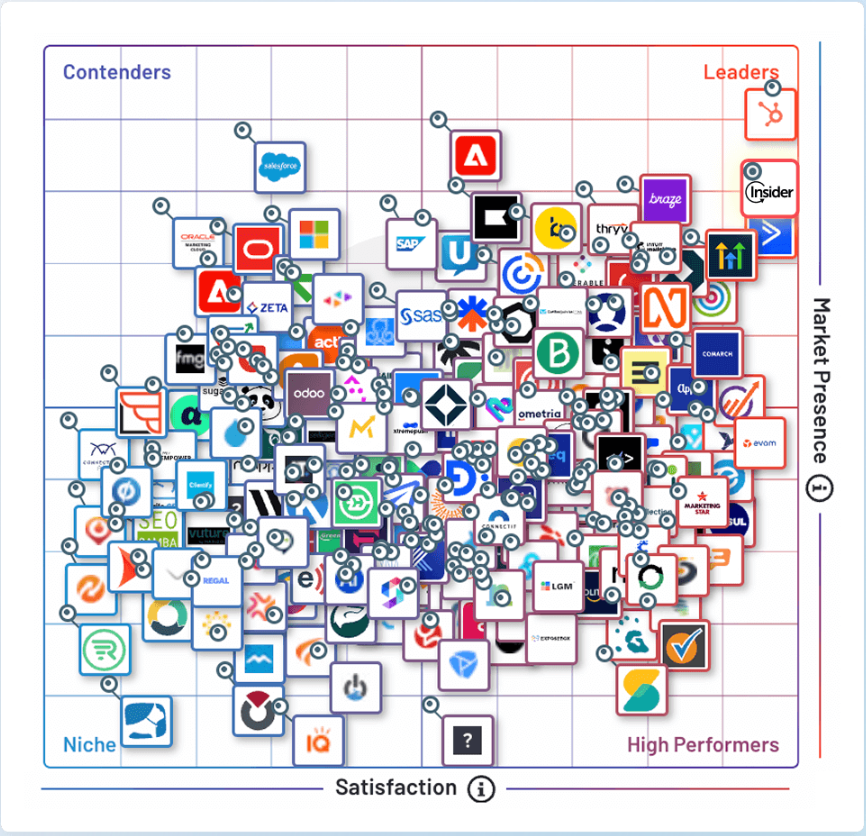
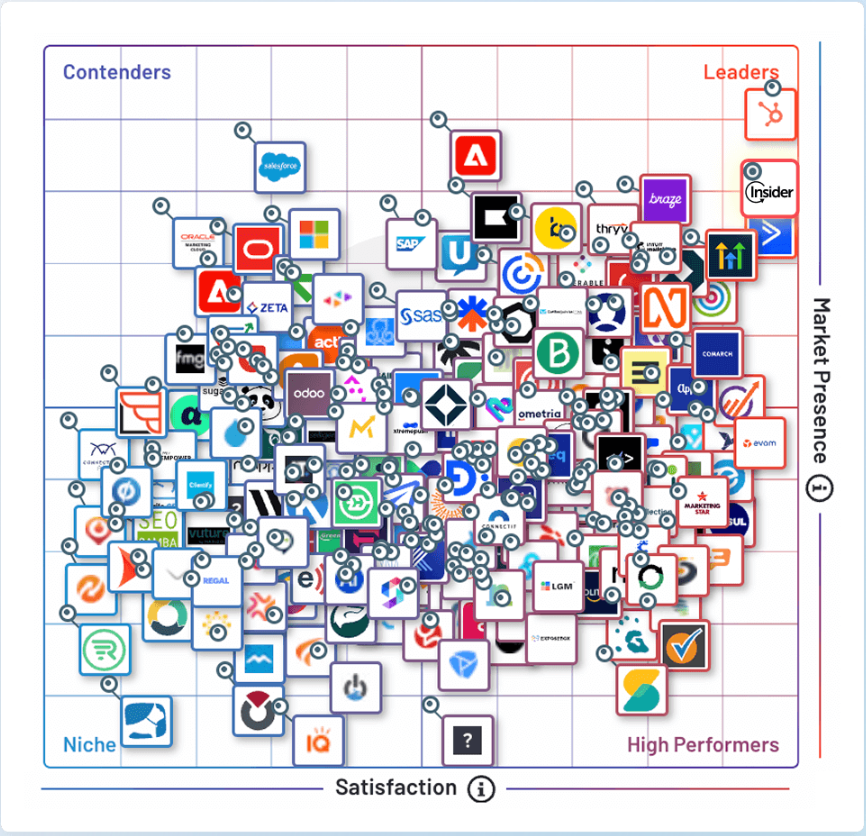
Together, these categories attract more than 100K searches per month. They dominate analyst reports, vendor comparisons, RFP checklists, and marketing teams’ budgets. Every marketer uses at least one of these platforms, and more than 430 tools already compete to win mindshare in these boxes.
So the question is obvious: Why build something new in a space that already feels full?
And why introduce a new category, “a composable Marketing OS”, instead of riding the wave of existing mindshare?
People who follow the economics of business know that when categories mature, when the buzzwords blur together, and when tools start solving the same problems the same way, it’s a sign. A sign that a shift is already underway.
And that shift has fundamentally changed the way marketing works.
The Old World: Built for the App Era
For the last decade, the platforms that defined marketing automation were all architected for the mobile-app era (could quote examples here, but I’m sure it already rings a bell). Their core logic assumed that customers lived inside apps and websites, and that the most important thing a marketer could do was track every event: app opens, push clicks, page views, email actions, cart activity.
Their superpower was automation. Send the right message at the right time based on user behavior.
It worked beautifully… for that era.
But it also created an unintended blind spot: an obsession with behavioral triggers and engagement metrics, instead of actual business outcomes.
Engagement went up, but margins didn’t. Messages increased, but intelligence didn’t. Every click triggered a campaign, even when it shouldn’t.
Those systems were built for a world that no longer exists.
The Market Has Moved. Intent Has Moved.
Today’s consumer journey doesn’t happen inside your app.
Discovery happens on Instagram. Comparison happens on Amazon. Clarification happens on WhatsApp. And increasingly, research happens on AI, “best sunscreen for oily skin,” “top running shoes,” “which laptop to buy for design work.”
The shift is dramatic and measurable:
47% of global digital purchases happen outside brand-owned stores.
According to a forecast by eMarketer, sales through U.S. retail marketplaces (i.e. marketplace-model ecommerce, not just brand-owned stores) are expected to reach $603.2 billion by 2027, which would represent 34.8% of total U.S. retail e-commerce sales.
According to Mint, 73% of purchasing decisions in India are influenced by online marketplaces.
Intent now forms in places legacy tools cannot see. By the time a user lands on your website, the decision is almost already made.
Traditional platforms built around website clicks and email behavior simply cannot understand or act on modern intent. And, they still function on incomplete signals.
A customer abandons their cart so the system pushes a discount.
A VIP customer raises a support ticket but still receives a “thank you” reward because the system only sees lifetime value, not live frustration.
A shopper clicks a product but doesn’t buy so they’re retargeted endlessly, even though Instagram DMs show they’re waiting for a size that’s out of stock.
They are automating without reasoning. Predicting without context. Engaging without awareness.
Behavioral data tells you what happened, but not why it’s happening, or whether it should trigger an action at all.
So, yes, these apps convince you about timely engagement, segmented users, and retention. But, do they deliver?
Giving you some space to ponder. See you in Part 2.
Desperate times call for desperate Google/Chat GPT searches, right? "Best Shopify apps for sales." "How to increase online sales fast." "AI tools for ecommerce growth."
Been there. Done that. Installed way too many apps. But here's what nobody tells you while you're doom-scrolling through Shopify app reviews at 2 AM—that magical online sales-boosting app you're searching for? It doesn't exist. Because if it did, Jeff Bezos would've bought (or built!) it yesterday, and we (fellow eCommerce store owners) would all be retired in Bali by now. Growing a Shopify store and increasing online sales isn’t easy—we get it. While everyone’s out chasing the next “revolutionary” tool/trend (looking at you, DeepSeek), the real revenue drivers are probably hiding in plain sight—right there inside your customer data. After working with Shopify stores like yours (shoutout to Cybele, who recovered almost 25% of their abandoned carts with WhatsApp automation), we’ve cracked the code on what actually moves the needle. Ready to stop app-hopping and start actually growing your sales by using what you already have? Here are four fixes that will get you there!
The Painful Truth: You're probably losing about 70% of your potential sales to cart abandonment. That's not just a statistic—it's real money walking out of your digital door. And looking for yet another Shopify app for abandoned cart recovery isn't going to fix it if you're not getting the fundamentals right.
The Quick Fix: Everyone knows you need multi-channel recovery that hits the sweet spot between "Hey, did you forget something?" and "PLEASE COME BACK!" But here's the reality—most recovery apps are a one-trick pony. They either do email OR WhatsApp, not both. And don't even get us started on personalizing offers based on cart value—that usually means toggling between three different dashboards while praying your apps talk to each other.
Enter ZEPIC: This is where we come in. With ZEPIC's automated Flows, you can: Launch WhatsApp recovery messages (with 95% open rates!) Set up perfectly timed email sequences (or vice versa) Create personalized recovery offers not just on cart value but based on your customer’s behavior/preferences Track and optimize everything from one dashboard
Fix #2: Reactivate past customers today
The Painful Truth: You're probably losing about 70% of your potential sales to cart abandonment. That's not just a statistic—it's real money walking out of your digital door. And looking for yet another Shopify app for abandoned cart recovery isn't going to fix it if you're not getting the fundamentals right.
The Quick Fix: Everyone knows you need multi-channel recovery that hits the sweet spot between "Hey, did you forget something?" and "PLEASE COME BACK!" But here's the reality—most recovery apps are a one-trick pony. They either do email OR WhatsApp, not both. And don't even get us started on personalizing offers based on cart value—that usually means toggling between three different dashboards while praying your apps talk to each other.
Enter ZEPIC: This is where we come in. With ZEPIC's automated Flows, you can: Launch WhatsApp recovery messages (with 95% open rates!) Set up perfectly timed email sequences (or vice versa) Create personalized recovery offers not just on cart value but based on your customer’s behavior/preferences Track and optimize everything from one dashboard
Offering light at the end of the tunnel is Google’s Privacy Sandbox which seeks to ‘create a thriving web ecosystem that is respectful of users and private by default’. Like the name suggests, your Chrome browser will take the role of a ‘privacy sandbox’ that holds all your data (visits, interests, actions etc) disclosing these to other websites and platforms only with your explicit permission. If not yet, we recommend testing your websites, audience relevance and advertising attribution with Chrome’s trial of the Privacy Sandbox.
Top 3 impacts of the third-party cookie phase-out
Who’s impacted
How
What next
Digital advertising and acquisition teams
Lack of cookie data results in drastic fall in website traffic and conversion rate
Review all cookie-based audience acquisition. Sign up for Chrome’s trial of the Privacy Sandbox
Digital Customer Experience
Customers are not served relevant, personalised experiences: on the web, over social channels and communication media
Multiply efforts to collect first-party customer data. Implement a Customer Data Platform
Security, Privacy and Compliance teams
Increased scrutiny from regulators and questions from customers about data storage and usage
Review current cookie and communication consent management, ensure to align with latest privacy regulations


%201.png)