Marketers have spent the last decade chasing the holy grail: the 360° customer profile. Entire platforms, budgets, teams, and architectures were built around this promise. The idea that if we understood the customer deeply enough, we could predict what they would do next, and influence it.
And for a long time, that promise was true.
When most of the consumer journey happened inside a brand’s ecosystem. The website, the app, the CRM, the emails: the “360° view” was more or less complete.
But that’s not the world we live in anymore.
Today, the consumer journey is not a circle you can close or a funnel that you influence. It’s a constellation that you cannot comprehend.
And yet, almost every marketing system still acts like customer data is the only object that matters.
This is the paradox of customer data:
We’ve never collected more of it, yet the actual customer journey lives increasingly outside it.
The customer is still central, but they are no longer contained.
Why “360°” Isn’t 360° Anymore
Let’s look at the modern journey from the perspective of objects, not just people.
A customer doesn’t just “browse” a product. The product itself carries a story: its reviews, its repeat rates, its return risk, its marketplace momentum, its social perception.
A customer doesn’t just “abandon” a cart. The order object has context: stock constraints, operational delays, sizing issues, recommendation patterns, delivery timelines.
A customer doesn’t just “read” an email. Their conversation objects like Instagram DMs, WhatsApp chats, support threads carry emotional signals no event tracker can capture.
But legacy systems flatten all of this complexity into a single table called “the customer.” Everything is forced into that one dimension.
A VIP with a support ticket? The customer profile still shows them as “high value,” but emotionally, they’re anything but.
A non-buyer who’s been DM’ing about restocks? The profile marks them as “inactive,” but they’re actually warm; maybe even closer to purchase than anyone in a 6-touch journey flow.
An item that keeps trending on Amazon? The marketing team plans for a 3-step discount laddering campaign to clear out stock thinking no one is interested.
A returning customer who left a scathing review? Legacy systems still put them in the “Loyalty” segment.
Here’s the reality:
When all objects collapse into “customer data,” marketing loses the context that makes signals meaningful. This is why “360°” is no longer 360°. It’s a partial view presented as a complete one.
Seeing the Whole Picture: When Objects Come Together
Now imagine a different world, one where customer data isn’t the end of the story, but the beginning.
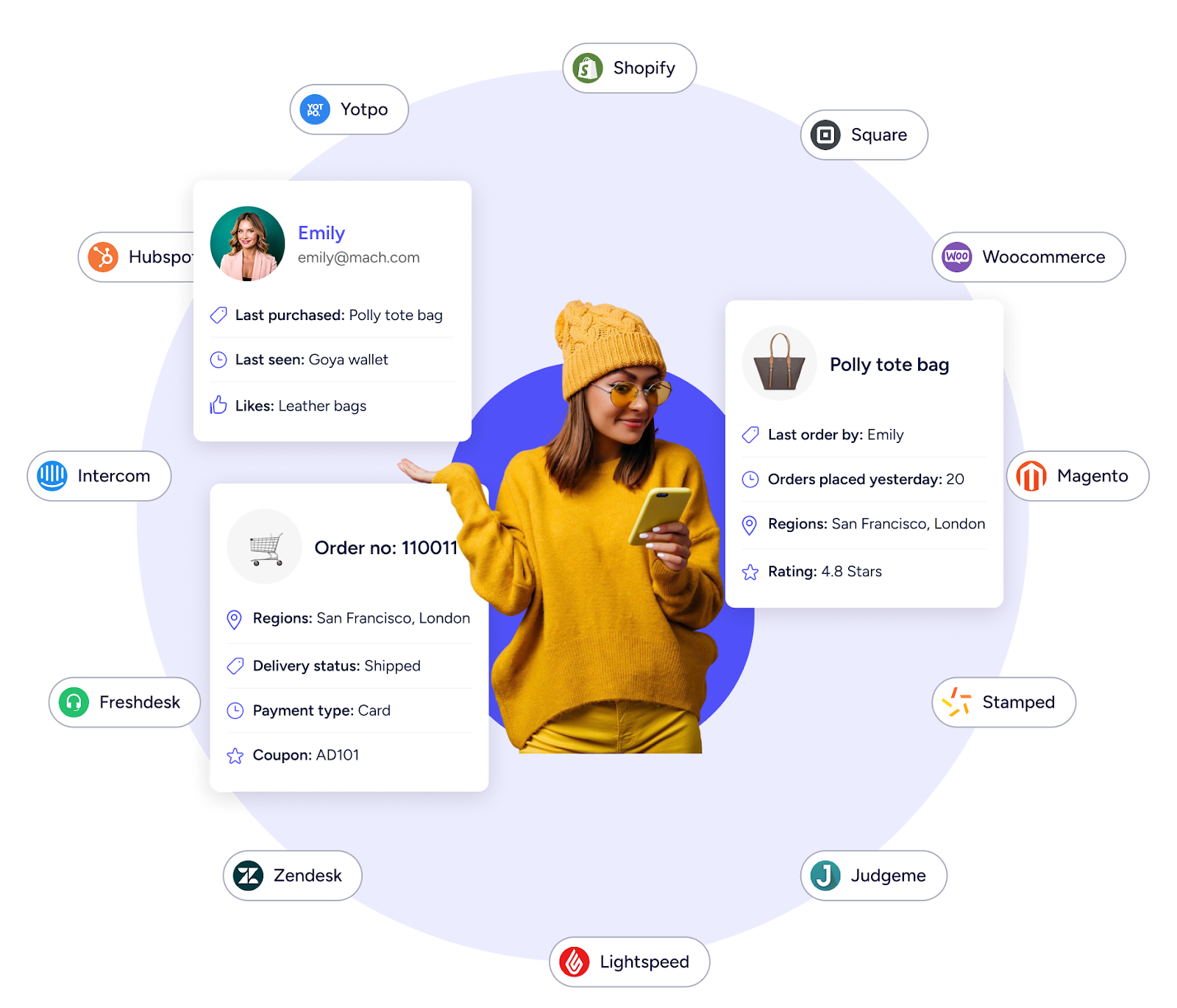
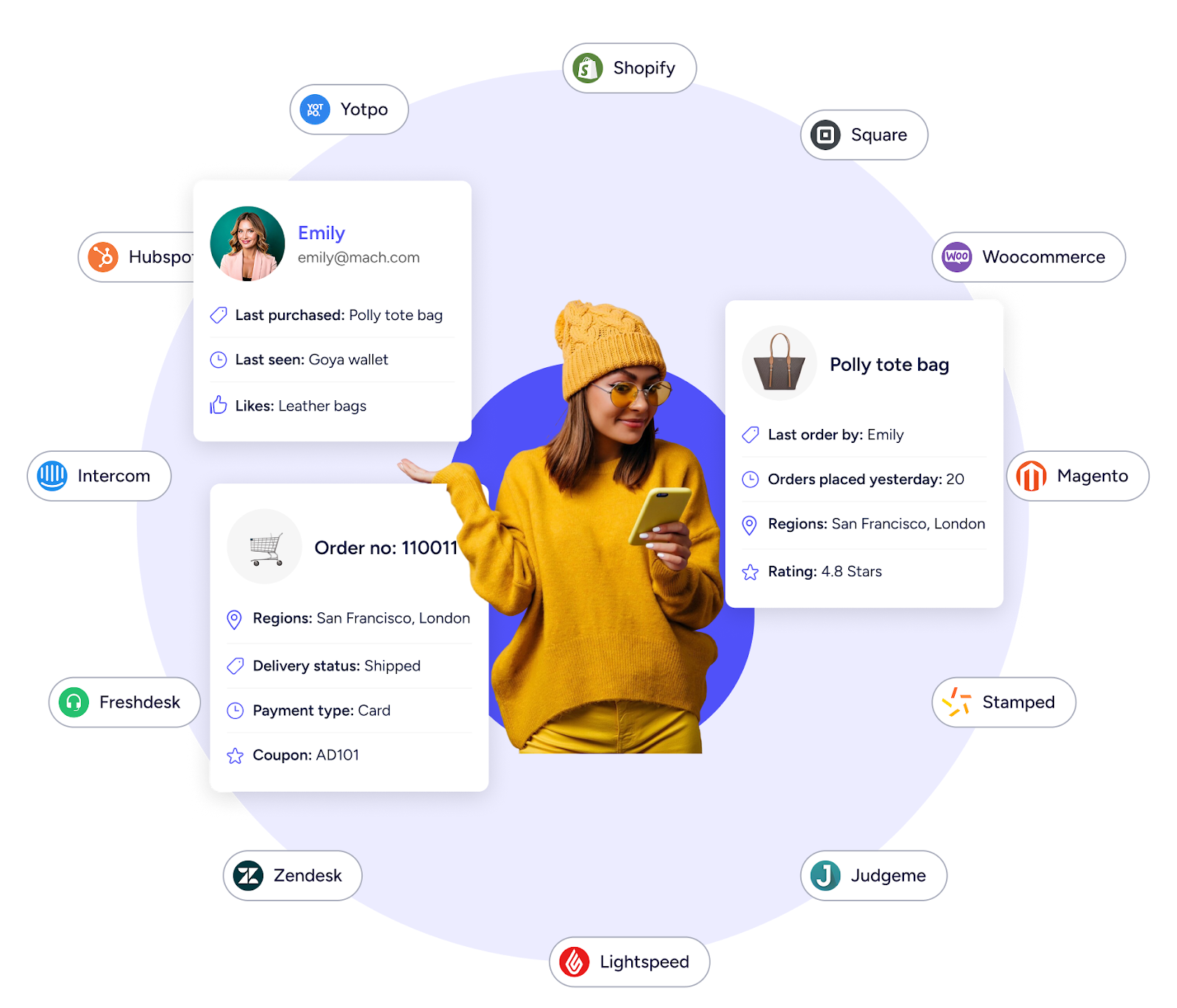
A world where every major object in the commerce ecosystem is connected:
Suddenly, insights stop being guesses and start becoming truths.
You know that a non-buyer who keeps engaging on Instagram isn’t “inactive”—they’re waiting for a restock or price drop. You know that a VIP with a support ticket isn’t “high value” at the moment—they’re frustrated and not someone to upsell today. You know that a product trending on Amazon shouldn’t be discounted onsite, because external demand is rising. You know that a customer browsing your return policy isn’t engaging deeply—they’re anticipating a bad experience. You know that someone asking the same question on WhatsApp and IG isn’t confused—they’re signaling high intent.
You can see the entire relationship between signals, not just isolated behavior.
This is the promised land: a world where marketing understands relationships, not just events.
Because when objects connect, behavior finally has meaning.
But marketing tools weren’t built for context. They were built for channels, workflows, and behavior-based triggers.
And that’s the fracture Part 3 will address:
If customer-only systems no longer reflect reality, what does the system of the future look like?
What does marketing look like when every object is connected? What does activation look like when signals finally talk to each other? What does intelligence look like when context, not channels, drives decision-making?
Desperate times call for desperate Google/Chat GPT searches, right? "Best Shopify apps for sales." "How to increase online sales fast." "AI tools for ecommerce growth."
Been there. Done that. Installed way too many apps. But here's what nobody tells you while you're doom-scrolling through Shopify app reviews at 2 AM—that magical online sales-boosting app you're searching for? It doesn't exist. Because if it did, Jeff Bezos would've bought (or built!) it yesterday, and we (fellow eCommerce store owners) would all be retired in Bali by now. Growing a Shopify store and increasing online sales isn’t easy—we get it. While everyone’s out chasing the next “revolutionary” tool/trend (looking at you, DeepSeek), the real revenue drivers are probably hiding in plain sight—right there inside your customer data. After working with Shopify stores like yours (shoutout to Cybele, who recovered almost 25% of their abandoned carts with WhatsApp automation), we’ve cracked the code on what actually moves the needle. Ready to stop app-hopping and start actually growing your sales by using what you already have? Here are four fixes that will get you there!
The Painful Truth: You're probably losing about 70% of your potential sales to cart abandonment. That's not just a statistic—it's real money walking out of your digital door. And looking for yet another Shopify app for abandoned cart recovery isn't going to fix it if you're not getting the fundamentals right.
The Quick Fix: Everyone knows you need multi-channel recovery that hits the sweet spot between "Hey, did you forget something?" and "PLEASE COME BACK!" But here's the reality—most recovery apps are a one-trick pony. They either do email OR WhatsApp, not both. And don't even get us started on personalizing offers based on cart value—that usually means toggling between three different dashboards while praying your apps talk to each other.
Enter ZEPIC: This is where we come in. With ZEPIC's automated Flows, you can: Launch WhatsApp recovery messages (with 95% open rates!) Set up perfectly timed email sequences (or vice versa) Create personalized recovery offers not just on cart value but based on your customer’s behavior/preferences Track and optimize everything from one dashboard
Fix #2: Reactivate past customers today
The Painful Truth: You're probably losing about 70% of your potential sales to cart abandonment. That's not just a statistic—it's real money walking out of your digital door. And looking for yet another Shopify app for abandoned cart recovery isn't going to fix it if you're not getting the fundamentals right.
The Quick Fix: Everyone knows you need multi-channel recovery that hits the sweet spot between "Hey, did you forget something?" and "PLEASE COME BACK!" But here's the reality—most recovery apps are a one-trick pony. They either do email OR WhatsApp, not both. And don't even get us started on personalizing offers based on cart value—that usually means toggling between three different dashboards while praying your apps talk to each other.
Enter ZEPIC: This is where we come in. With ZEPIC's automated Flows, you can: Launch WhatsApp recovery messages (with 95% open rates!) Set up perfectly timed email sequences (or vice versa) Create personalized recovery offers not just on cart value but based on your customer’s behavior/preferences Track and optimize everything from one dashboard
Offering light at the end of the tunnel is Google’s Privacy Sandbox which seeks to ‘create a thriving web ecosystem that is respectful of users and private by default’. Like the name suggests, your Chrome browser will take the role of a ‘privacy sandbox’ that holds all your data (visits, interests, actions etc) disclosing these to other websites and platforms only with your explicit permission. If not yet, we recommend testing your websites, audience relevance and advertising attribution with Chrome’s trial of the Privacy Sandbox.
Top 3 impacts of the third-party cookie phase-out
Who’s impacted
How
What next
Digital advertising and acquisition teams
Lack of cookie data results in drastic fall in website traffic and conversion rate
Review all cookie-based audience acquisition. Sign up for Chrome’s trial of the Privacy Sandbox
Digital Customer Experience
Customers are not served relevant, personalised experiences: on the web, over social channels and communication media
Multiply efforts to collect first-party customer data. Implement a Customer Data Platform
Security, Privacy and Compliance teams
Increased scrutiny from regulators and questions from customers about data storage and usage
Review current cookie and communication consent management, ensure to align with latest privacy regulations


%201.png)